Several readers have asked me to write about the French Riviera, and I put it off for a while because everyone writes about the French Riviera. Then my wife and I went for our anniversary, and I realised the thing nobody covers is the part I actually know something about: how you move between these towns. Because on this stretch of coast, choosing the wrong way to travel does not cost you money so much as it costs you the afternoon.
What to know before you book anything
- Nice Cote d’Azur airport publishes flat taxi fares for 2026: 85 euros to Cannes, 95 to Monaco, 72 to Antibes and Juan-les-Pins, before supplements.
- Monaco is easiest by train from Nice, roughly 20 to 25 minutes, with departures through the day.
- Saint-Tropez has no station. The nearest is Saint-Raphael, and the sensible arrivals are by boat from Sainte-Maxime or Saint-Raphael.
- The two weeks that change everything: the Cannes Film Festival in the second half of May, and the Monaco Grand Prix, which moved from May to early June from 2026.
Everything moves here except a metro
The Riviera has more transport modes packed into eighty kilometres than almost anywhere in France. Cars, buses, coaches, trams, trains, boats, bicycles, motorbikes, helicopters and one of the busiest airports in the country. What it does not have, anywhere along the coast, is an underground railway, and that absence explains a lot about the traffic.
What it does have is a coastal railway line that runs behind the beaches for most of the way, and that line is the single most useful thing a visitor can learn. It links Nice to Monaco, Menton, Antibes and Cannes without ever asking you to park. Express coaches from Nice airport cover the same corridor: line 81 to Cannes, line 80 to Monaco and Menton, line 82 to Antibes and Vallauris, line 90 towards Saint-Raphael, all bought before boarding rather than on the vehicle.
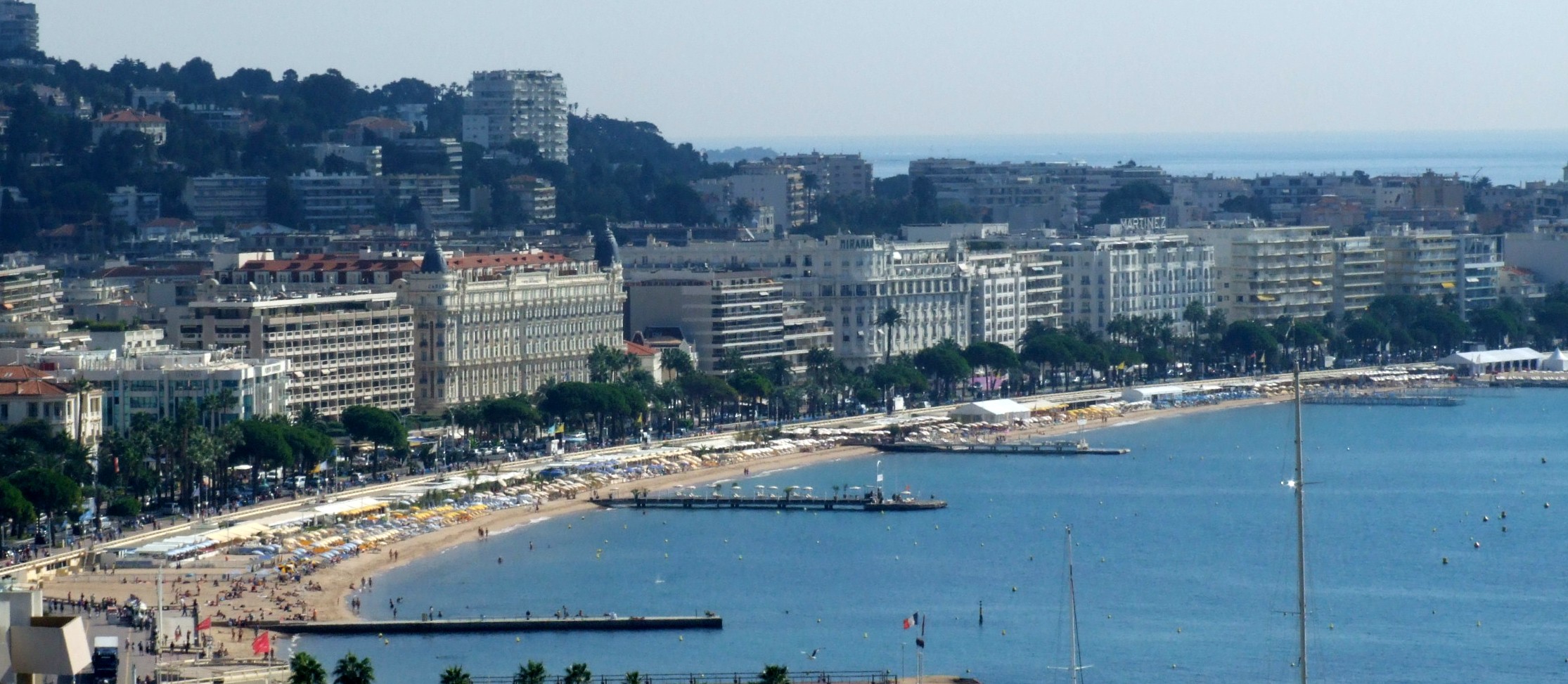
La Croisette in Cannes
Cannes, the easiest of the three
Cannes is the town you can visit without a plan. It sits on the coastal railway, the airport coach runs straight there, and the flat taxi fare from Nice airport is published at 85 euros. Once you are there, the part visitors care about is walkable: the Croisette, the old town on Le Suquet, the port.
The catch is the calendar. The Film Festival takes over the entire town, and the 2026 edition ran from 12 to 23 May. During those days hotel rates, taxi availability and the simple ability to cross the Croisette all change character. The town also now limits cruise traffic: since 2026 Cannes allows only one ship of more than 3,000 passengers per day, with a ceiling of 6,000 cruise passengers daily, a decision taken by the city council in June 2025.
My advice, having done it the lazy way and the organised way, is to arrive by train and not think about a car at all.
Saint-Tropez, where the transport decision actually matters
Saint-Tropez is the one town on this list where getting there badly can ruin the visit. There is no railway station. The peninsula is served by one road that funnels every car, delivery van and coach through the same bottleneck, and in July and August that road is exactly as bad as its reputation.
The alternative is the water, and it is not a novelty crossing, it is the practical route. Les Bateaux Verts run the short hop from Sainte-Maxime in around 15 to 20 minutes, with departures roughly every twenty minutes at the height of the season. From Saint-Raphael, Les Bateaux Bleus take about an hour and operate from mid-April to the end of October, priced at around 27 euros one way when we checked in August 2026.
Arrive by sea and you land at the port, which is where you wanted to be anyway. Arrive by car and you park outside the centre and walk in, having spent an hour longer than the boat took.
Monaco, the one to do by train
Monaco is the simplest of the three to reach and the most awkward to drive in. The train from Nice-Ville takes roughly 20 to 25 minutes and runs frequently through the day. The flat taxi fare from the airport is published at 95 euros, and the express coach on line 80 covers the same run.
If you do drive, the public car parks are better value than people expect. Under the tariffs in force since 1 January 2026, the first hour is free, the charge is capped at 24 euros for 24 hours, and a reduced night rate applies between 8pm and 8am. That is a genuinely reasonable structure for a place with almost no on-street parking to offer.
The date to note has changed. The Grand Prix left its traditional May slot in the 2026 calendar and now runs in early June, with the 2026 race held from 5 to 7 June. If you want the circuit without the crowd, walk the harbour section any other week of the year and you can follow the whole lap on foot.
The three side by side
| Town | Best way in | Flat taxi fare from Nice airport | The week to avoid |
|---|---|---|---|
| Cannes | Coastal train, or airport coach line 81 | 85 euros | The Film Festival, second half of May |
| Saint-Tropez | Shuttle boat from Sainte-Maxime or Saint-Raphael | Not published; the road route is the problem, not the price | All of August, on the road at least |
| Monaco | Train from Nice-Ville, 20 to 25 minutes | 95 euros | Grand Prix week, now early June |
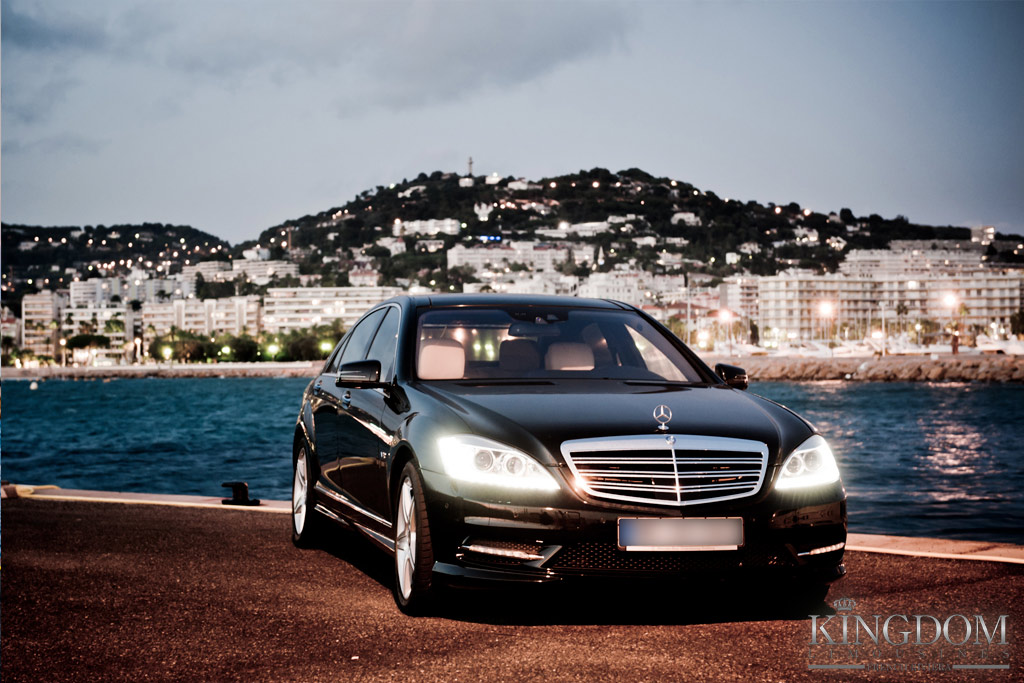
Kingdom Limousines our valet service
What I learned in the back of a chauffeured car
I booked a chauffeur service for part of our stay, which is not something I would normally do. We took the bus in from the airport on the evening we landed, which was fine, and I had arranged a car for the following morning through Kingdom Limousines, whose office is at Cannes la Bocca. Leather, wood, a screen tracking us in real time, and the strange sensation of being looked after that I am not used to. I drive a bus for a living. Nobody usually holds a door for me.
The useful part was not the car. It was the conversation. Our driver, who introduced himself as Jean-Pierre, told me the assumption people make about this business is almost entirely wrong. He said the customers are not mostly celebrities, and pointed at me as the counter-example, which I took in the spirit intended. Birthdays, weddings, business dinners, and above all airport pickups and drop-offs make up the ordinary week. The film festival is a big fortnight, but single private events across the year add up to more.
What I took from it is a practical point rather than a glamorous one. On this coast, a driver is not really buying you prestige, it is buying you the removal of three specific problems: parking in towns that have none, the corniche at the wrong hour, and the coordination of multiple pickups when there are more than two of you. If none of those apply, the train is better and you will see more from it.
Is three towns enough for a first visit?
For a long weekend, yes, and stretching to four usually means spending the extra day in transit. If you have a full week, Antibes and Menton are the natural additions and both are on the same railway line.
Do I need a car at all?
Not for these three. A car helps for the hill villages inland, where public transport thins out quickly, and it is a liability everywhere on the coast in summer. Whatever you drive, remember that minimum third-party insurance cover is a legal requirement in France as in most of Europe, and that rental conditions on driver age and licence seniority vary from one company to the next.
When is the coast at its best?
Late September, on our experience and on that of everyone local we spoke to. The sea is still warm, the roads have emptied, and the boat shuttles are still running.
Working out how to get from the airport to your hotel?
The arrival is the part of a Riviera trip people plan least and regret most. The options are genuinely different in price and in hassle.
Published 2014. Fully rewritten in August 2026. Fares, timetables and event dates are those published at the time of writing and change from season to season.