When we first wrote about high technology creeping into ordinary cars, the two things that impressed us were a Ford Mondeo that could park itself and a Toyota with a touch screen controlling the electronics. Both felt like the future. Twelve years later one of them has been quietly deleted because almost nobody used it, and the other took over the entire industry so thoroughly that safety bodies are now trying to push it back. That is a better story than either of the original predictions.
Where the promises landed
- Self-parking: Ford confirmed it was dropping automated parallel parking, its chief operating officer putting the cost at about 60 dollars per vehicle and saying very few people used it.
- Touch screens: they won everywhere, and Euro NCAP is now requiring physical controls for basic functions in its 2026 tests.
- Driver assistance: mandatory across the EU on all new registrations since 7 July 2024, with a further phase from July 2026.
- The practical consequence: the car you collect from a rental desk behaves differently from the one you own, and you find out at the barrier.
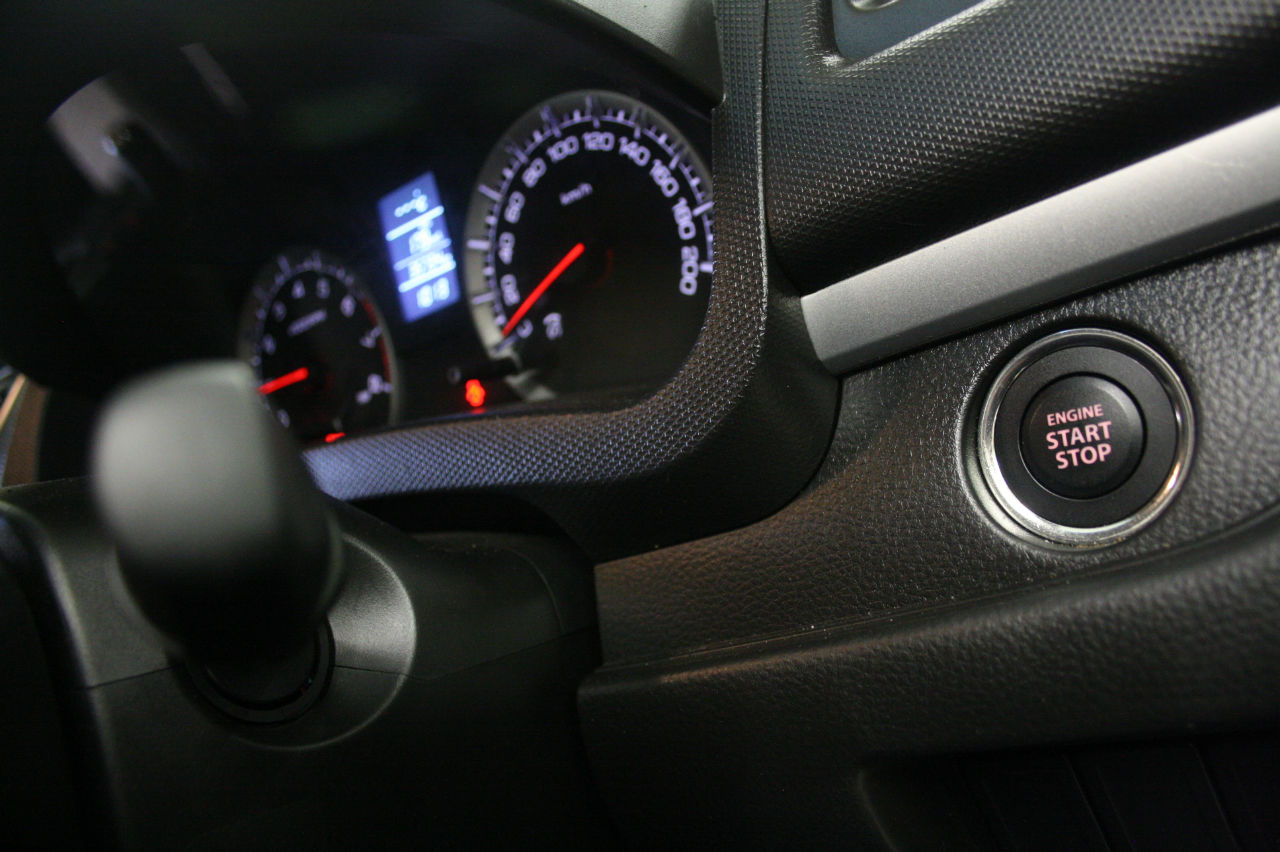
The high-tech car is now within reach!
The self-parking story has an ending, and it is not the one we expected
Automated parking is being taken out of cars rather than added to them. Ford, whose Mondeo was one of the cars that made the feature famous, has been removing automated parallel parking from its line-up. Its chief operating officer told investors in early 2025 that very few people were using it, that it cost around 60 dollars per vehicle, and that dropping it was part of a wider cost reduction.
The deletions have worked through the range over several model years, starting with the Mustang Mach-E and taking in the Lincoln Navigator, the F-150 Lightning, and the 2025 Explorer, Aviator and Escape.
What makes this interesting is not the accounting. It is that the feature solved a problem people genuinely have. Surveys keep finding that a large share of drivers are nervous about parallel parking. They just did not trust a machine to do it for them, which is a useful thing to remember every time a manufacturer announces that a system will change how we drive.
Touch screens won, and are now being wound back
The touch screen went from a Toyota talking point to the default way of operating a car, and the safety consequences caught up with it. Almost every manufacturer moved climate control, mirror adjustment, drive modes and sometimes the wipers onto a central display, because a screen is cheaper to build and easier to update than a bank of switches.
Euro NCAP has decided that went too far. From its 2026 test protocols, cars are expected to provide physical controls for a short list of basic functions, specifically the indicators, hazard lights, horn, windscreen wipers and the emergency call function, if they are to score full marks. Interfaces are also assessed on how intuitive they are, with credit for physical controls on frequently used functions such as climate.
This is not a ban on screens. It is a line drawn under which functions should never require you to look away from the road, and it is arguably the most consumer-friendly thing to happen to car interiors in a decade.
The technology that arrived without anyone asking for it
The real change since 2014 is regulatory, not commercial. The European Union’s General Safety Regulation made a package of driver assistance systems compulsory on all new cars registered from 7 July 2024, having already applied them to newly approved model types from July 2022. A further phase applies from July 2026, extending the scope to advanced driver distraction warning and to wider pedestrian and cyclist detection.
Here is what is actually fitted, and how much say you have over it.
| System | What it does | Can you turn it off? |
|---|---|---|
| Intelligent speed assistance | Reads speed limit signs and warns you when you exceed them | Yes, but it switches itself back on every time you start the car |
| Autonomous emergency braking | Brakes for you when a collision is imminent | Not normally, and you would not want to |
| Driver drowsiness and attention warning | Monitors alertness and warns when it detects fatigue or inattention | Usually via a menu, and it often resets on restart |
| Emergency lane keeping | Steers you back if you drift out of your lane | Generally yes, per journey rather than permanently |
The detail that surprises most drivers is the reset behaviour. A system you switched off yesterday is on again this morning, by design, because the regulation treats the safe state as the default.
Where you meet all of it at once: the rental desk
A rental car is now the hardest driving environment most people encounter, and the reason is the dashboard rather than the road. You have five minutes in an unfamiliar car park, no handbook, and a car that will bong at you for reasons you cannot yet identify.
Before you drive off the forecourt, it is worth spending three minutes on the following, in this order:
- Find the indicator and wiper stalks and confirm they are stalks. On several recent models they are not, and discovering that at a roundabout is genuinely dangerous.
- Locate the speed warning and the chime it makes, so you do not spend the first hour wondering what is beeping.
- Set the mirrors and climate while stationary, since on a screen-only car both may be buried two menus deep.
- Pair your phone, or decide not to. Fumbling with Bluetooth in traffic is the exact behaviour the distraction rules exist to discourage.
- Check whether lane keeping is active, because an unexpected tug on the wheel on a narrow road is unsettling if you were not expecting it.
If you would rather do the phone and navigation part properly, our rundown of the apps worth having on your phone as a car owner covers the tools that genuinely earn their place on a trip.
Are these systems actually making driving safer?
The regulation exists because collision data supported it, and autonomous emergency braking in particular has a strong evidence base behind it. What is much less settled is how drivers behave around assistance systems over the long term, and that is a question the industry is still studying rather than one anyone can answer confidently today.
Does older equipment become illegal?
No. These requirements apply to new vehicles at registration, not retroactively to cars already on the road. A 2014 Mondeo remains perfectly legal to drive.
Will screens disappear again?
No, and that is not what Euro NCAP is asking for. The likely outcome is a hybrid dashboard: a screen for navigation, media and settings, with real switches for the handful of things you need without looking.
That is where twelve years of in-car technology has actually landed. Not in the cars that park themselves, but in the ones that quietly watch the road on your behalf. What else has appeared in a car you have driven recently that genuinely changed the experience? We are always interested to hear it.
Renting something more interesting than a hire-desk hatchback?
The premium end of the rental market has its own rules on deposits, driver age and payment cards, and they catch people out.
Published 2014. Fully rewritten in August 2026. Regulatory dates refer to the European Union framework and to Euro NCAP protocols; requirements differ outside Europe.